


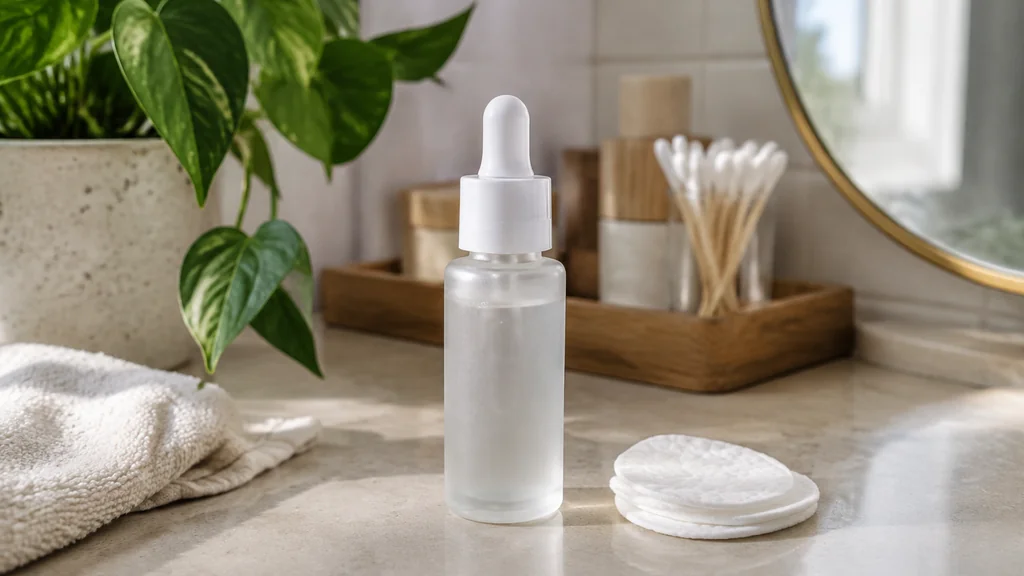
Salicylic acid is a beta-hydroxy acid that dissolves the plug of dead skin and oil sitting inside a pore. That makes it useful for blackheads, whiteheads and mild inflammatory acne, and close to useless for the deep, painful cysts sitting under the skin. It can help with some types of acne, but it does not cure acne.
Most people can judge whether it is working after eight to twelve weeks of consistent use. A visible difference in a fortnight is unlikely; early changes may reflect hydration, while repair takes longer.
What Salicylic Acid Actually Does Inside a Pore
Sebum and dead corneocytes travel up the follicle and out through the opening. When that traffic jams, you get a microcomedone, the lesion you cannot see yet that becomes everything else.
Salicylic acid is oil-soluble, so it slips into the sebaceous follicle instead of sitting on the surface the way glycolic acid does. Once inside, it loosens the bonds holding dead skin cells together, a process called desquamation. The plug breaks up, the pore drains, and the bump flattens.
It also has a mild anti-inflammatory effect, which is why a pimple that is already red and tender can calm down a little. What it does not do is kill Cutibacterium acnes outright the way benzoyl peroxide does, and it will not shrink a sebaceous cyst. Those need a different plan.
The Concentrations That Matter
Over-the-counter skincare in the United States usually lands between 0.5 and 2 percent. Two percent is the ceiling for a leave-on product sold without a prescription, and it is the strength most studies and most dermatologists point to.
Below 0.5 percent, you are mostly buying a nice texture. Above 2 percent in a wash-off cleanser, the contact time is too short for the number to mean much. The ingredient needs minutes on skin to work effectively.
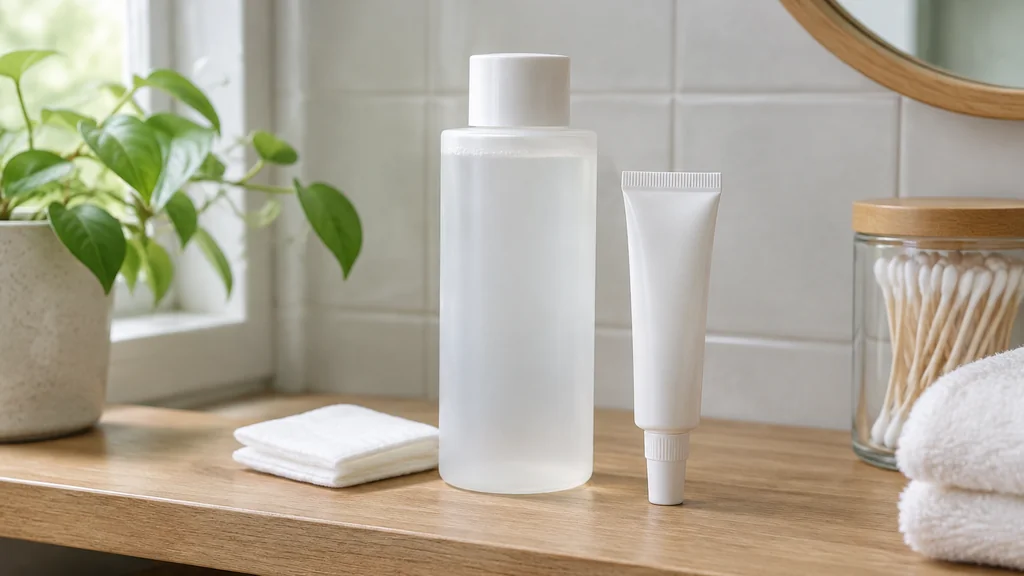
- Cleanser: gentle, good for oily and back acne, limited because it rinses away
- Toner or liquid exfoliant: the most effective over-the-counter format
- Spot treatment: higher strength, small area, drying if overused
- Pad or wipe: convenient, easy to over-apply
If your skin is dry or you are using a retinoid at night, start at a lower percentage twice a week and build up. Check the label for the actual percentage, since the front of the bottle may not make it clear.
How to Use It Without Wrecking Your Skin
The mistake almost everyone makes is stacking salicylic acid with three other actives in the same week and then blaming the acid for the irritation. Here is a routine that holds up.
- Cleanse with a mild, non-stripping face wash and pat dry.
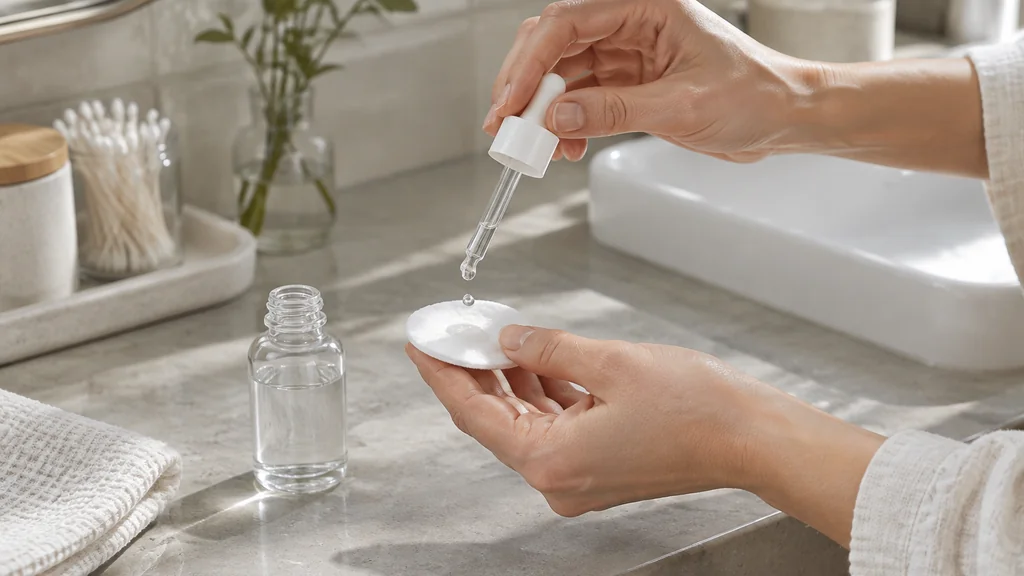
- Apply your salicylic acid product to dry skin, thin layer, avoiding the eye area and the corners of the nose.
- Wait a minute or two for it to settle.
- Follow with a light moisturiser containing ceramides or glycerin.
- Use sunscreen in the morning, every morning, because exfoliated skin burns faster.
- Start with two or three evenings a week and increase only if your skin stays calm.
- Give it twelve weeks before you decide it failed.
If you are also using a prescription retinoid, use the products on alternate nights. If you are using benzoyl peroxide, use it in the morning and the acid at night. And if you are tempted to squeeze whatever is left, read this first on whether it is okay to pop pimples before your fingers do damage that takes months to fade.
How Long Before You See a Difference
Blackheads and closed comedones respond first, usually somewhere between four and eight weeks. Inflammatory papules take longer because you are also waiting on the inflammation to settle and on the pore to stop re-blocking.
Twelve weeks is when you can judge it. If you are eight weeks in and nothing has changed, consider whether the percentage is too low, you are using it too rarely, or the acne is not the kind this ingredient fixes. Our breakdown of how long it takes for pimples to go away walks through the timeline for each type of lesion.
Purging is real but short. If you break out in the first two to four weeks in places you normally break out, that is the follicle clearing. If you are getting new lesions in new places at week ten, that is irritation, and you should stop.
Where Salicylic Acid Falls Short
It is a comedolytic, which means it handles blocked pores. It is not an antibiotic, not a hormone treatment, and not a substitute for isotretinoin in severe nodular acne.
It will not help much with:
- Deep, painful nodules and cysts
- Hormonal acne along the jaw and chin
- Acne driven mainly by inflammation rather than blockage
- Post-inflammatory hyperpigmentation, which needs sunscreen and time
There is also a real risk of over-exfoliating. Salicylic acid plus a retinoid plus a physical scrub plus a clay mask in one week is how people end up with a raw, stinging barrier that breaks out worse than before. If your skin is tight, shiny and stinging, stop everything except cleanser, moisturiser and sunscreen for a fortnight.
When to Stop and Call a Dermatologist
Book an appointment if you have nodules or cysts, if you are scarring, if your acne is affecting your mood, or if twelve weeks of a properly used two percent product has done nothing.
A dermatologist can add a prescription retinoid, an oral antibiotic, hormonal therapy or isotretinoin. Those are the tools that change severe acne, and no over-the-counter acid competes with them. Waiting a year to “try everything first” is how people end up with permanent scars they did not need.
Picking is the single biggest predictor of scarring in most people’s routines. If you want to understand why, this piece on whether it is good to pop pimples explains what happens under the skin when you do.

Salicylic Acid for Pimples FAQ
Is salicylic acid good for pimples?
Yes, for blackheads, whiteheads and mild inflammatory acne. It dissolves the plug inside the pore and calms some of the redness. It is much less useful for deep cysts and hormonal acne, which need prescription treatment.
Can I use salicylic acid every day?
Many people can, at a low percentage, once their skin has adjusted. Start two or three evenings a week and build up over a month. If you get stinging, flaking or new breakouts in new areas, cut back to twice a week.
Does salicylic acid make you purge?
It can, for two to four weeks, in the areas where you already break out. Purging is the follicle clearing faster than usual. Breakouts in new areas after week six may indicate irritation. Cut back on use.
Can I use it with benzoyl peroxide or retinol?
Yes, with spacing. Benzoyl peroxide in the morning and salicylic acid at night works for many people. With a prescription retinoid, alternate nights instead of layering, and moisturise properly on both.
How long should I give it before giving up?
Twelve weeks of consistent use at a sensible percentage. If there is no change at all by then, either the strength is wrong for you or the acne type is wrong for this ingredient. That is the point to see a dermatologist for advice on next steps.

Jessica Bishop
Jessica writes about acne scar types, treatment options, and everyday skincare routines for Acne-Scarring.info, focused on practical, easy-to-follow guidance.
View all posts by Jessica Bishop →