


By Jessica Bishop | Updated July 2026
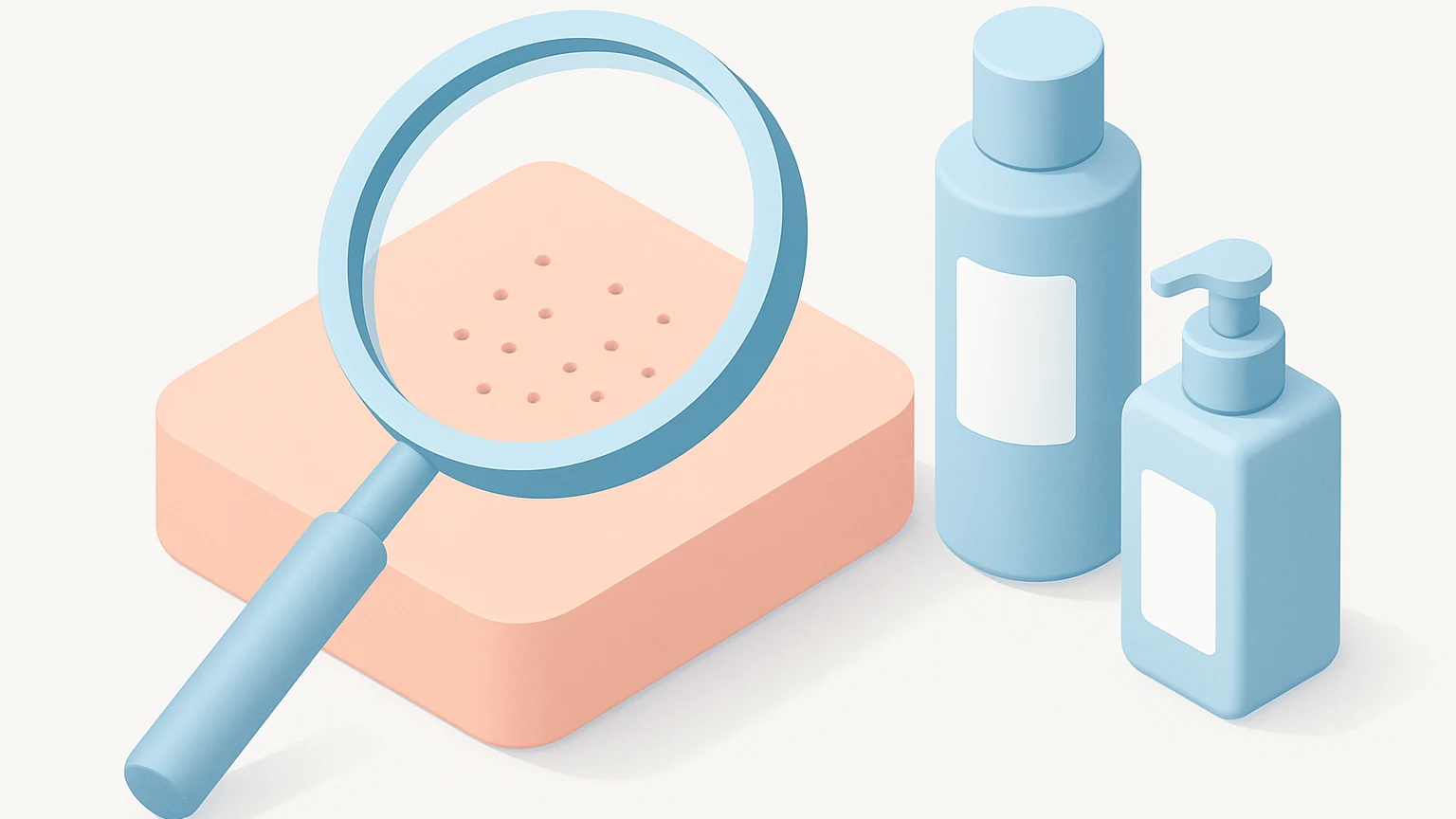
Fungal acne is not true acne at all. Its medical name is Malassezia (or Pityrosporum) folliculitis, and it is caused by an overgrowth of yeast in the hair follicles, not by the bacteria and clogged pores behind ordinary breakouts. That single difference is why the benzoyl peroxide, salicylic acid, and antibiotic creams that fix normal acne often do nothing for fungal acne, and sometimes make it worse. Here is how to tell the two apart, and what actually clears the fungal kind.
Quick disclaimer first: this article is for information only. It is not medical advice, and it cannot diagnose your skin. If a breakout is not clearing, see a dermatologist, who can confirm fungal acne with a simple skin scraping under a microscope.
What Is Fungal Acne, Really?
Everyone carries Malassezia yeast on their skin. It is a normal part of the skin’s microbiome and usually causes no trouble. Fungal acne happens when that yeast multiplies faster than the skin can keep it in check, gets down into the hair follicles, and triggers inflammation. The result is a crop of small, itchy bumps that look a bit like acne but behave nothing like it.
The yeast feeds on skin oils. It thrives in warmth, humidity, and sweat, which is why fungal acne flares in summer, after workouts, or under tight synthetic clothing that traps heat. Courses of oral antibiotics are a classic trigger too: they knock back the skin’s bacteria and let the yeast take over the space that is left. That is one reason a person can finish an acne antibiotic and suddenly break out worse than before.
Fungal Acne vs Regular Acne: The Tells
You can usually separate the two by look, feel, and location. Regular acne (acne vulgaris) is caused by Cutibacterium acnes bacteria inside pores that are clogged with oil and dead skin. Fungal acne is a follicle infection by yeast. The clues below give it away.
1. The bumps look identical to each other
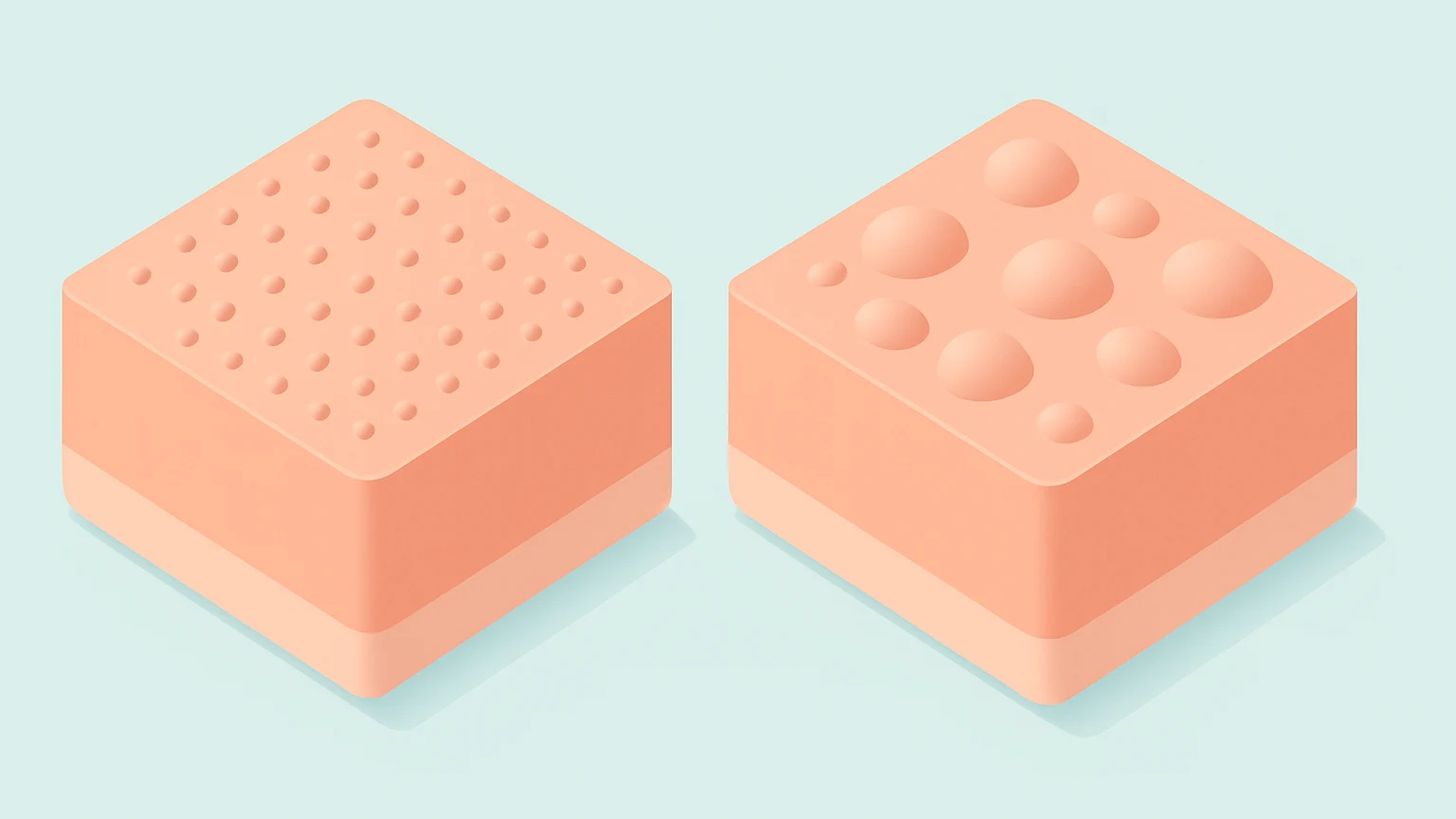
This is the biggest tell. Fungal acne shows up as dozens of tiny bumps that are all the same size and shape, usually 1 to 2 mm, like a rash. Regular acne is a mixed bag: blackheads, whiteheads, a few big painful papules, the odd cyst, all different sizes. Doctors call fungal acne “monomorphic” (one form) and true acne “polymorphic” (many forms). If your breakout looks weirdly uniform, think fungal.
2. It itches
Fungal acne commonly itches. Ordinary acne rarely does. That itch, especially across the chest, upper back, or hairline after sweating, is one of the strongest pointers toward yeast.
3. No blackheads
Fungal acne does not produce blackheads or whiteheads, because it is not a clogged-pore problem. If you have plenty of comedones mixed in, that points to regular acne instead.
4. Location follows sweat and oil
Fungal acne favours the chest, upper back, shoulders, and the forehead and hairline. These are oil-rich, sweat-prone areas. True facial acne clusters more around the cheeks, jaw, and chin. Plenty of people who have battled stubborn back acne that never quite clears are actually dealing with fungal folliculitis, not bacterial acne.
5. It ignores your acne routine
The practical tell: you have been diligent with a good acne routine for weeks and it is not helping, or it is getting worse. Fungal acne does not respond to the standard bacterial-acne toolkit, so a breakout that shrugs off benzoyl peroxide and antibiotics is a strong hint you are treating the wrong thing.
| Feature | Fungal acne (Malassezia folliculitis) | Regular acne (acne vulgaris) |
|---|---|---|
| Cause | Yeast overgrowth in follicles | Bacteria + clogged pores |
| Appearance | Uniform tiny bumps, all alike | Mixed sizes: blackheads, whiteheads, cysts |
| Itch | Often itchy | Rarely itchy |
| Blackheads | None | Common |
| Common spots | Chest, back, shoulders, hairline | Cheeks, jaw, chin, forehead |
| Responds to | Antifungals | Benzoyl peroxide, retinoids, antibiotics |
Why Your Acne Products Aren’t Working (and Can Make It Worse)
Standard acne treatments target bacteria and clogged pores. Fungal acne is neither, so those products miss. Worse, some can feed the problem.
Oral antibiotics are the clearest example. By thinning out the skin’s bacteria, they hand the yeast an open field. Many people first meet fungal acne right after an antibiotic course prescribed for regular acne. Heavy, oily moisturisers and some plant oils can also make things worse, because Malassezia feeds on specific fatty acids found in a lot of skincare. Piling on rich creams to calm the “acne” can quietly keep the yeast fed.
This is why matching the treatment to the actual cause matters so much. A gentle, oil-aware routine like the ones covered in our guide to acne self-care basics is a reasonable starting point, but if the bumps are fungal, the routine has to shift toward antifungals rather than more acne actives.
What Actually Treats Fungal Acne
The core idea is simple: reduce the yeast. Antifungal ingredients do that, and most are available over the counter as medicated shampoos, which double as body and face washes for this purpose.
Antifungal washes (first line)
Dermatologists frequently recommend an antifungal shampoo used as a short-contact wash. You lather it on the affected skin, leave it for 3 to 5 minutes, then rinse. The common active ingredients are:
- Ketoconazole 2% (as in Nizoral): the best studied option for Malassezia.
- Zinc pyrithione: found in many anti-dandruff washes, gentle enough for regular use.
- Selenium sulfide (as in Selsun Blue): effective, though it can be drying.
Because fungal acne and dandruff are driven by the same yeast, it is no coincidence that dandruff shampoos treat both. Many people use one of these as a body wash a few times a week during a flare, then once a week to keep it from coming back.
Topical antifungals
A leave-on antifungal cream such as ketoconazole or clotrimazole can be applied to smaller patches. These are widely sold for skin fungal infections and work on the same yeast.
Oral antifungals (for stubborn cases)
When the folliculitis is widespread or keeps returning, a dermatologist may prescribe a short course of an oral antifungal such as itraconazole or fluconazole. Oral treatment tends to clear things faster and more completely, which is one reason a proper diagnosis is worth getting rather than guessing indefinitely. Oral antifungals need medical supervision, so this is a conversation to have with a doctor, not a self-prescription.
Most people see improvement within 2 to 4 weeks of consistent antifungal use. If nothing changes after a month of genuine effort, that is a strong signal to get a professional diagnosis, because a few other skin conditions can mimic this pattern.
The “Fungal Acne Safe” Idea: Ingredients to Watch
Because Malassezia feeds on certain fatty acids and oils, a whole corner of skincare has grown up around “fungal acne safe” products, meaning formulas that avoid the lipids the yeast likes. The science behind it is real: the yeast depends on specific fatty acids to grow, so cutting off that food supply can help alongside antifungal treatment.
In practice, during a flare it is worth being cautious with heavy facial oils and rich occlusive creams while you get the yeast under control. You do not need to obsess over every ingredient label, and you should not stop moisturising altogether, but lightening up on the oiliest products often helps. When choosing a cleanser, a plain gentle option is fine; our rundown of which CeraVe cleanser suits acne-prone skin is a reasonable place to start for a simple base routine.
How to Keep Fungal Acne From Coming Back
Fungal acne has a habit of returning, because the yeast never fully leaves the skin. Prevention is mostly about not giving it the warm, damp, oily conditions it loves.
- Shower and change after sweating. Do not sit around in damp gym clothes. Sweat trapped against skin is prime yeast territory.
- Choose breathable fabrics. Loose cotton lets skin dry; tight synthetics hold heat and moisture.
- Keep a maintenance wash. Using an antifungal or zinc pyrithione wash once a week can stop a flare before it starts, especially in hot weather.
- Go easy on rich oils during humid months. Save the heaviest creams for when your skin is calm and dry.
- Be cautious with long antibiotic courses. If you need antibiotics for something, know that a fungal flare afterward is possible, and treat it as fungal rather than reaching for more acne products.
When to See a Dermatologist
Self-treatment with an antifungal wash is reasonable for a mild, itchy, uniform breakout on the chest or back. See a professional if the bumps are widespread, painful, spreading, not improving after about four weeks, or if you simply are not sure what you are looking at. A dermatologist can confirm fungal acne quickly, rule out lookalikes such as bacterial folliculitis or true acne, and prescribe an oral antifungal if you need one. Getting the diagnosis right saves months of treating the wrong condition.
Frequently Asked Questions
How do I know if my acne is fungal?
The strongest signs are uniform tiny bumps that are all the same size, itching, no blackheads, a location on the chest, back, shoulders, or hairline, and a breakout that does not respond to your normal acne routine. If several of those fit, fungal acne is likely. A dermatologist can confirm it in minutes with a skin scraping viewed under a microscope.
Can benzoyl peroxide treat fungal acne?
Not really. Benzoyl peroxide targets acne bacteria, not yeast, so it does little for fungal acne. Some people use it as a mild adjunct, but the effective treatments are antifungals such as ketoconazole, zinc pyrithione, or selenium sulfide. If benzoyl peroxide has not helped after a few weeks, that itself is a hint the breakout may be fungal.
Does fungal acne go away on its own?
Sometimes a mild flare settles once the trigger passes, such as the end of hot weather or a sweaty training block. But because the yeast stays on the skin, fungal acne tends to come back without treatment. An antifungal wash usually clears it faster and lowers the chance of a repeat than waiting it out.
Is fungal acne contagious?
No. The Malassezia yeast already lives on nearly everyone’s skin, so you are not catching it from someone else or passing it on. Fungal acne is an overgrowth of your own resident yeast, driven by heat, sweat, oil, and sometimes antibiotics, not by transmission.
How long does fungal acne take to clear?
With consistent antifungal treatment, most people notice improvement within 2 to 4 weeks. Widespread cases treated with an oral antifungal can clear faster. If you have used an antifungal wash properly for a month with no change, see a dermatologist, because the diagnosis may be something else.
The Bottom Line
If your breakout is a field of matching little bumps, itchy, blackhead-free, sitting on your chest or back, and shrugging off every acne product you own, it is probably fungal acne, not acne at all. Switch from bacteria-fighting actives to an antifungal wash like ketoconazole or zinc pyrithione, ease off the heaviest oils during the flare, and give it a few weeks. If it is stubborn or you are unsure, a dermatologist can confirm it and prescribe something stronger. Treating the right cause is the whole game here.
Sources
- DermNet NZ. “Malassezia folliculitis.” dermnetnz.org
- Rubenstein RM, Malerich SA. “Malassezia (Pityrosporum) Folliculitis.” Journal of Clinical and Aesthetic Dermatology, 2014. NCBI
- American Academy of Dermatology. “Acne: Diagnosis and treatment.” aad.org
- Cleveland Clinic. “Fungal Acne (Malassezia / Pityrosporum Folliculitis).” clevelandclinic.org
Medical disclaimer: This article is for informational purposes only. It does not constitute medical advice, diagnosis, or treatment. Fungal acne can resemble several other skin conditions, and only a qualified clinician can confirm it. Consult a dermatologist before starting or stopping any treatment. Individual results vary.
About the author: Jessica Bishop writes about skincare and dermatology topics for acne-scarring.info, drawing on years of researching and managing acne-prone skin. She is not a medical professional. The information in this article is based on published dermatological sources and is not a substitute for a consultation with a qualified clinician.

Jessica Bishop
Jessica writes about acne scar types, treatment options, and everyday skincare routines for Acne-Scarring.info, focused on practical, easy-to-follow guidance.
View all posts by Jessica Bishop →