


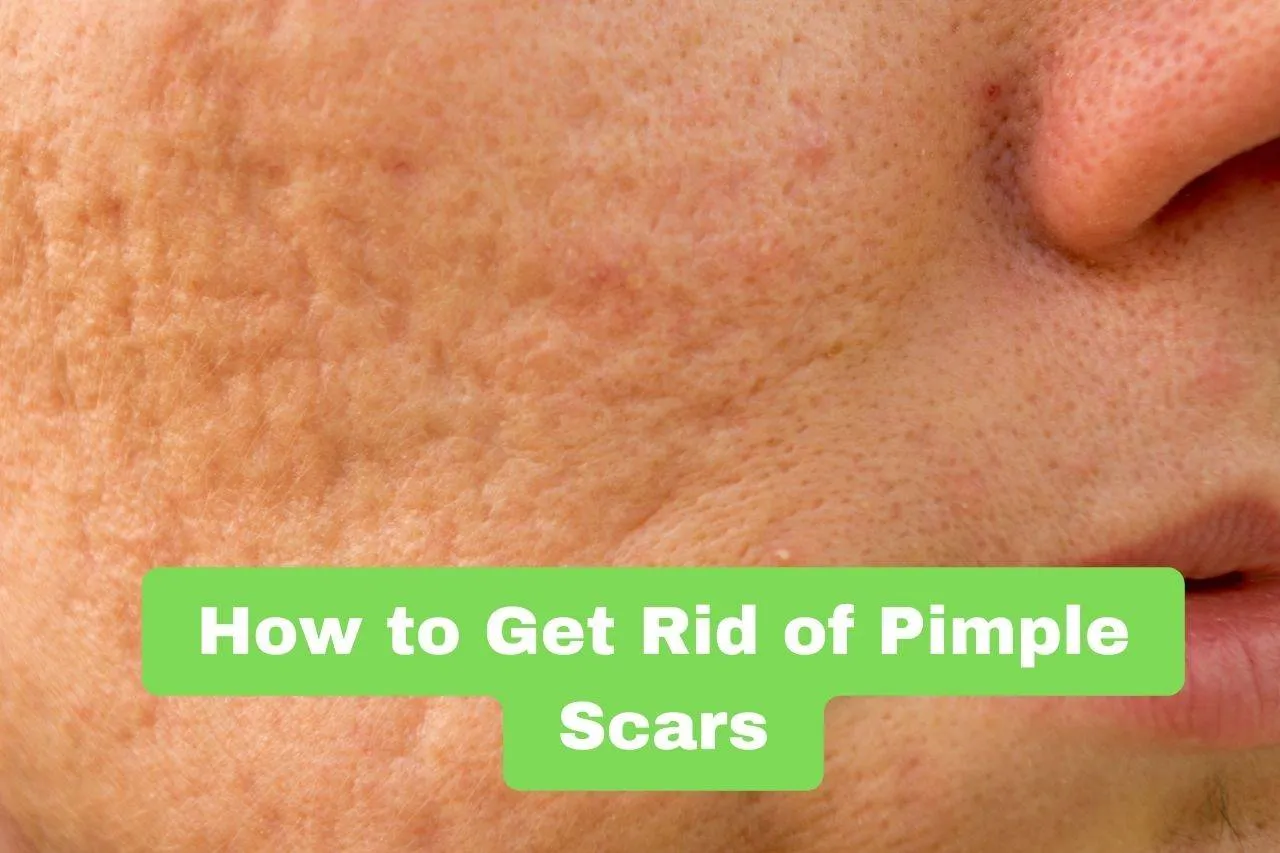
Most of what people call “pimple scars” aren’t scars at all. They’re flat marks left behind after a spot heals, and marks fade. The right actives plus daily sun protection can lift them over a few months. A true scar is different: a pit or a raised bump where the skin’s texture actually changed, and those don’t fully clear with a cream from the shelf. So the first job in getting rid of pimple scars is working out which one you have, because the answer decides everything you do next.
This guide sorts marks from scars, walks through what genuinely helps each at home, and is honest about the point where you need a dermatologist. None of it is a substitute for professional medical advice, but it will stop you wasting money on the wrong fix.
Are they scars, or just marks?
Run a finger over the spot. If the skin is smooth and only the colour is off, it’s a mark, not a scar. If you can feel a dip or a raised lump, the texture has changed and that’s a real scar.
Flat marks come in two colours, and they’re treated differently:
- Brown, tan or grey marks are post-inflammatory hyperpigmentation (PIH): extra melanin dropped during the breakout. This is more common and more stubborn in medium-to-deep skin tones.
- Pink, red or purple marks are post-inflammatory erythema (PIE): dilated blood vessels near the surface. Redness is not pigment, so brightening ingredients don’t touch it. Time, gentle care and, if needed, a vascular laser are what move it.
Textured scars are the ones that changed the skin itself:
| Type | What it looks like | What it needs |
|---|---|---|
| Ice pick | Small, deep, narrow pits like a pinprick | In-office (TCA CROSS, punch, laser) |
| Boxcar | Wider pits with sharp edges | Microneedling, laser, subcision |
| Rolling | Shallow, wavy dips | Subcision, microneedling |
| Hypertrophic / keloid | Raised, firm, sometimes itchy | Steroid injections, silicone, laser |
If you want the full breakdown of pitted types and how each is treated, we cover it in types of acne scars and the best treatments for each. For now, the short version: marks respond to skincare, texture doesn’t.
Why do pimples scar in the first place?
A pimple is inflammation, and scarring is about how deep and how long that inflammation runs. A surface whitehead rarely leaves anything. A deep, painful cyst that sits for weeks damages the tissue around it, and that’s when the skin either drops extra pigment (a mark) or loses collagen and leaves a pit. Three things push a spot toward scarring:
- Depth and duration. Cystic and nodular acne scars far more than the odd whitehead. The longer a lesion stays inflamed, the more likely it leaves a trace.
- Picking and squeezing. Popping forces inflammation deeper and tears the skin, which is the most avoidable cause of lasting marks and pits.
- Skin type and genetics. Deeper skin tones mark more readily with pigment, and a tendency to keloids runs in families. Neither is your fault, but both change the plan.
None of this can be undone after the fact, but it explains the whole strategy: calm inflammation fast, keep your hands off, and protect the skin while it heals.
How to fade pimple marks at home
This is where home care earns its keep. Flat marks fade on their own eventually, but the right routine speeds it up and stops new marks setting in. Judge any product at around twelve weeks, not twelve days. Skin cell turnover is slow, and anything promising a visible difference in a fortnight is selling you hydration, not repair.
One thing that catches people out: a mark often looks its darkest or reddest just as the spot finishes healing, then starts to fade from there. That’s normal, not a sign the treatment is failing. Take a photo in the same light every few weeks so you can actually see the change, because day to day it’s invisible.
Sunscreen, every day, first
This is the single highest-leverage step and the one people skip. UV drives melanin production, so an unprotected mark darkens and lingers for months longer than it needs to. A broad-spectrum SPF 30 or higher, applied every morning, is what lets everything else work. Skip it and you’re bailing water with the tap still running.
Azelaic acid
Azelaic acid, usually 10% over the counter and up to 15–20% by prescription, is one of the most useful single ingredients here. It fades PIH, calms PIE, and is gentle enough for most skin tones, including deeper ones where harsher brighteners can backfire. It’s a sensible first buy if you only get one active.
Vitamin C
A vitamin C serum, typically 10–20% L-ascorbic acid, brightens brown marks and adds antioxidant protection that pairs well with your sunscreen. It targets pigment, so it helps PIH and does little for red PIE. Introduce it slowly if your skin is reactive.
Niacinamide
Niacinamide, around 4–10%, evens tone and settles inflammation without irritation. It’s a quiet workhorse rather than a dramatic fix, and it layers well with almost everything, which makes it easy to keep up long term.
Retinoids
Retinoids speed up cell turnover, which fades marks and, over the long run, nudges shallow texture. Start with an over-the-counter option: adapalene 0.1% (sold as Differin) or a retinol. These help marks and mild unevenness, but be clear-eyed: prescription tretinoin or tazarotene are the stronger tools, and even those work slowly on true pits. If you’re chasing texture, a retinoid is a supporting act, not the lead. More on this in does retinol help acne scars.
AHA and BHA exfoliants
Chemical exfoliants clear dead surface cells so fresher skin shows through. Glycolic and mandelic acid (AHAs) work on tone and texture; salicylic acid (a BHA) also keeps pores clear so you break out less in the first place. Two or three nights a week is plenty. Daily is how people give themselves the raw, blotchy look that makes marks worse.
Alpha arbutin and tranexamic acid
For pigment that won’t shift, alpha arbutin and tranexamic acid are targeted brighteners that work without the irritation of hydroquinone. They’re a good next step for stubborn PIH, and, like azelaic acid, tend to be well tolerated on deeper skin tones.
One rule ties all of this together: add one active at a time, give it weeks, and patch test. Piling on five acids at once irritates the skin, and irritation is exactly what caused the marks in the first place.
A simple routine that fades marks
You don’t need ten products. A workable routine looks like this, built up slowly rather than started all at once:
- Morning: gentle cleanser, a vitamin C or niacinamide serum, then broad-spectrum SPF 30+. The sunscreen is the non-negotiable part.
- Evening: cleanse, then azelaic acid most nights. Swap in a retinoid or an AHA/BHA exfoliant two or three nights a week, not on the same night, and not on top of everything else.
Introduce one new active, use it for a few weeks, and only then add the next. If skin gets red or flaky, you’re going too fast; drop back a step. Consistency over months beats intensity over days, every time.
What actually helps pitted or raised scars
Here’s the honest part. If you can feel the scar, no cream will fill a pit or flatten a keloid. Home care keeps the surrounding skin healthy and can soften how a scar reads, but changing the texture is a job for a professional. These are the main in-office routes, and a dermatologist will match them to your scar type and skin tone.
| Treatment | Best for | Rough commitment |
|---|---|---|
| Chemical peels | Marks, shallow texture | A course of sessions |
| Microneedling | Boxcar, rolling scars | Several sessions, weeks apart |
| Fractional laser | Mixed atrophic scars | Multiple sessions; downtime |
| Subcision | Rolling scars, tethered pits | One or a few sessions |
| TCA CROSS | Ice pick scars | Repeated spot treatments |
| Steroid injection / silicone | Raised, hypertrophic, keloid | Ongoing, monitored |
Set your expectations honestly before you book. Dermatologists usually combine methods rather than rely on one, and the goal is meaningful improvement, not a flawless finish. A good result on deep scarring often means several sessions spread over months and a clear softening rather than skin that looks like it never broke out. That’s still worth it for most people, but going in expecting total erasure is how you end up disappointed.
Costs vary widely by clinic and country, so treat any figure you read as a ballpark and get a real quote at consultation. One caution worth repeating: on deeper skin tones, some of these procedures, medium-depth peels and certain lasers especially, carry a real risk of triggering fresh hyperpigmentation or keloids. A clinician experienced with your skin type should set the settings, not a discount spa.
How to stop new pimples from scarring
The cheapest scar treatment is the breakout that never scars. A few habits make a genuine difference:
- Don’t pick or pop. Squeezing pushes inflammation deeper and is the fastest route to a lasting mark or pit. If you struggle with this, it’s worth reading why popping pimples so often backfires.
- Treat active acne early. The less inflamed a spot gets, the less mark it leaves. Cystic, deep acne scars the most, so get it under control rather than riding it out.
- Wear sunscreen daily. Same reason as above: sun locks in and darkens marks while they’re healing.
- Be gentle. Harsh scrubs and constant touching keep the skin inflamed and slow every mark’s exit.
What doesn’t work
Plenty of viral advice is, at best, useless and at worst makes marks worse:
- Toothpaste. It can irritate and burn skin, and irritation is what deepens marks. It does nothing for a scar.
- Raw lemon juice. Too acidic, and it can make you photosensitive, which risks more pigmentation, not less.
- Aggressive scrubbing. Physical scrubs and daily strong acids inflame the skin and drag out PIE and PIH.
- “Overnight” and “erase scars” products. Real change in pigment takes weeks; texture takes procedures. Any product promising either overnight is marketing.
- DIY strong peels and at-home needling. High-percentage acids and needling done without training can burn skin and cause more scarring and pigmentation than they fix. Leave the strong stuff to a clinic.
Frequently asked questions
Do pimple scars go away on their own?
Flat marks usually do. Post-inflammatory pigmentation and redness fade over months as the skin renews, faster with sunscreen and actives. True textured scars, the pits and raised bumps, don’t fully self-resolve, though they can soften a little over years. We go deeper on this in does acne scarring go away.
How long do pimple marks take to fade?
Expect roughly three to six months for most flat marks with a consistent routine, sometimes longer for deep PIH on medium-to-dark skin. If nothing has shifted at all after a few months of daily sunscreen plus an active, see a dermatologist.
Can you get rid of pimple scars permanently at home?
You can fade marks at home, often completely. You cannot erase a pit or flatten a keloid at home; that needs an in-office procedure. Anyone selling permanent scar removal in a jar is overselling.
Does toothpaste get rid of pimple scars?
No. Toothpaste isn’t formulated for skin, tends to irritate, and can worsen the very marks you’re trying to fade. Skip it and use azelaic acid or a vitamin C serum instead.
Is it too late to treat old pimple scars?
No. Marks respond to actives and sun protection whenever you start, and even scars that are years old improve with the right in-office treatment. Older texture is more set than a fresh mark, so results come slower, but “too late” isn’t really a thing here.
When should I see a dermatologist?
See one if you have pitted or raised scars, if marks haven’t budged after several months, or if your acne is deep and recurring. Early professional treatment prevents the scars you’d otherwise be treating for years.
References
- American Academy of Dermatology, Acne scars: Treatment
- American Academy of Dermatology, How to fade dark spots in darker skin tones
- DermNet, Postinflammatory hyperpigmentation
- DermNet, Azelaic acid
This article is for general information and is not a substitute for professional medical advice. See a qualified dermatologist for diagnosis and treatment of acne scarring.

Jessica Bishop
Jessica writes about acne scar types, treatment options, and everyday skincare routines for Acne-Scarring.info, focused on practical, easy-to-follow guidance.
View all posts by Jessica Bishop →