


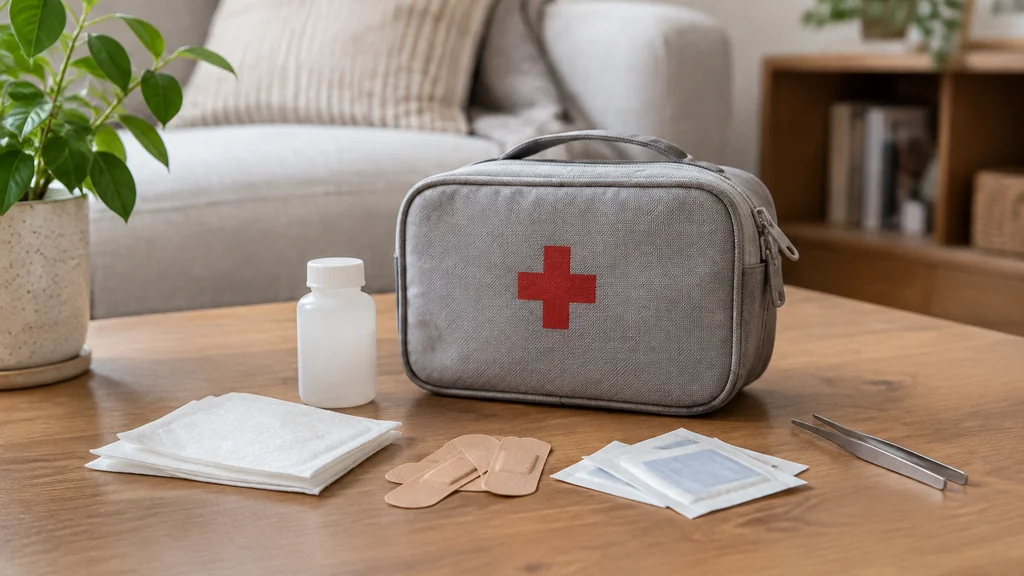
A keloid will not pop, because there is nothing inside it to release. It is a dense overgrowth of scar tissue. It has no pocket of pus or opening to drain, unlike a pimple, cyst or blister. Squeezing one adds fresh injury to tissue that already overreacts to injury, and the usual result is a bigger, itchier, more tender scar. Silicone sheeting can help manage the raised scar without adding new trauma.
The urge to squeeze a keloid can come from how it looks. Squeezing damages the skin, while treatments such as silicone sheeting and corticosteroid injections can help manage the scar.
Why a keloid looks like something you could squeeze
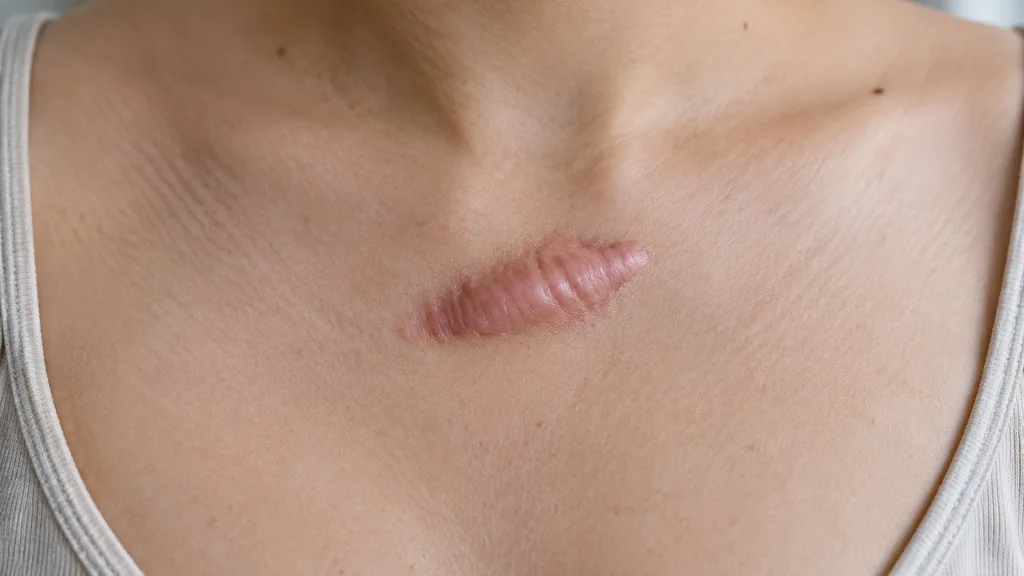
A raised, firm, sometimes shiny bump on the skin reads as “blocked pore” to almost everyone. Keloids are usually pink, red or darker than the skin around them, and they can be warm and itchy. On the chest, shoulders, earlobes and jawline, that combination looks exactly like a spot that needs emptying.
The difference sits underneath. A pimple forms around a plugged pore filled with Sebum and dead skin cells. A keloid is Collagen laid down in thick bundles, far beyond what the original wound needed. There is no cavity in the middle. Press it and you feel rubbery resistance, unlike the soft centre of a pimple.
Keloids also behave differently over time. A spot comes to a head and resolves within days. A keloid keeps growing for months, often spreading past the edges of the original injury. That outward creep is one of the clearest signs you are looking at scar tissue.
What happens when you try to pop one
Nothing drains, and the skin over the top gets damaged. That damage is a new wound in the same spot, and a keloid forms because the skin’s repair process runs hot. The scar often grows after each attempt.
People who squeeze repeatedly tend to describe the same sequence. First a small amount of clear fluid or blood from broken surface skin. Then soreness for days. Then a scar that is firmer and larger than before. In the worst cases the surface breaks down and a raw patch opens, which is a genuine infection risk on a scar with poor blood supply.
There is also a cosmetic cost. Trauma to a keloid can darken it, change its shape and make it harder to treat later. Dermatologists can do a great deal with a flat, stable scar. A scar that has been picked at for months is a harder starting point.
The one exception worth knowing about
A keloid can develop a pimple or cyst on top of it, and that is a different situation. If you can see a clear white head with a defined opening sitting on the scar surface, it may be a clogged pore on scarred skin. A keloid is made of collagen, while a pore can become blocked with oil and dead skin cells.
Even then, hands off is the safer default. A single warm compress and time will usually settle it. If it is painful, growing or surrounded by spreading redness, ask a dermatologist to examine it. The same rule applies to any scar that suddenly becomes hot, weepy or foul-smelling.
If you are dealing with several scar types at once, it helps to know which ones respond to what. The guide to getting rid of pimple scars separates marks that fade on their own from texture that needs treatment, which is a useful starting point before you decide what to book.
What actually helps a keloid
Keloids are treatable, and the evidence base is decent. What matters is matching the treatment to the scar and sticking with it long enough to judge a result. No cream removes a keloid at home, and anyone promising that is selling hope.
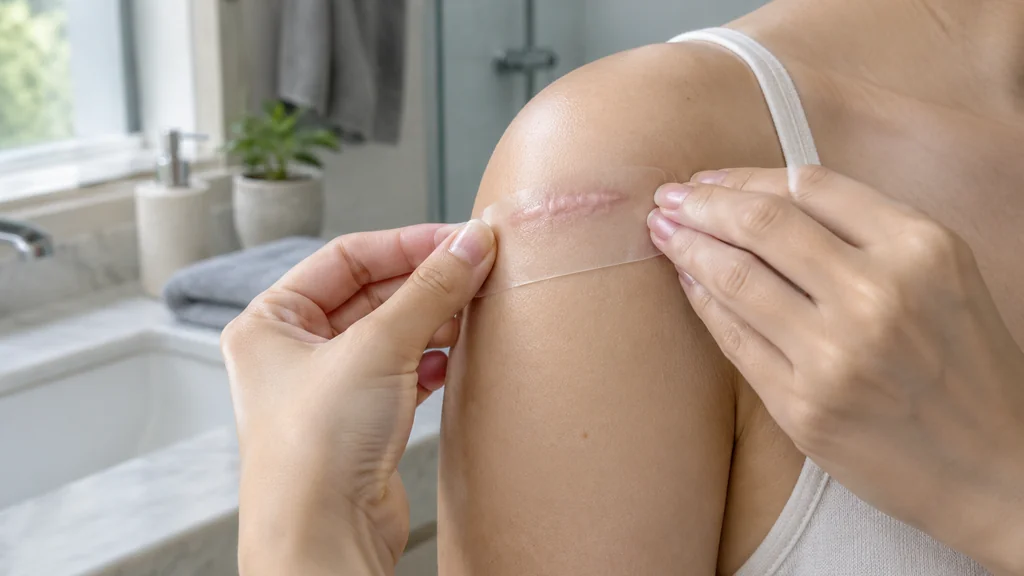
Silicone Sheeting and Silicone Gel are common treatments for raised scars. They keep the surface hydrated and under gentle pressure, which can soften and flatten tissue over months. Give the treatment time; twelve weeks is a more useful point to assess results than a fortnight.
For scars that do not respond, a dermatologist has options. Intralesional Corticosteroid Injections are common, often combined with other treatments. Cryotherapy, Laser Therapy and Pressure Therapy are also used for keloids. Surgical removal alone has a high recurrence rate on its own, so it is usually paired with another treatment afterwards.
Where a scar has become tethered or pitted, different techniques come into play. Punch excision for ice pick scars describes how a surgeon removes a deep scar and closes the defect. This procedure differs from flattening a keloid.
A routine for the next two weeks
If you are mid-urge right now, here is what to do instead.
- Put a silicone sheet or gel on the keloid and leave it alone.
- Cover it with a dressing if you cannot stop touching it.
- Use a cool compress for ten minutes when it itches.
- Keep the area out of direct sun, since UV darkens scar tissue.
- Photograph it in the same light every week so you can see real change.
- Book a dermatologist if it is growing, painful or spreading.
- Stop any product that stings, burns or leaves the scar redder.
Two weeks is not enough to judge a keloid treatment, but it is enough to break a picking habit. That alone changes the long-term outcome.
When to see a dermatologist
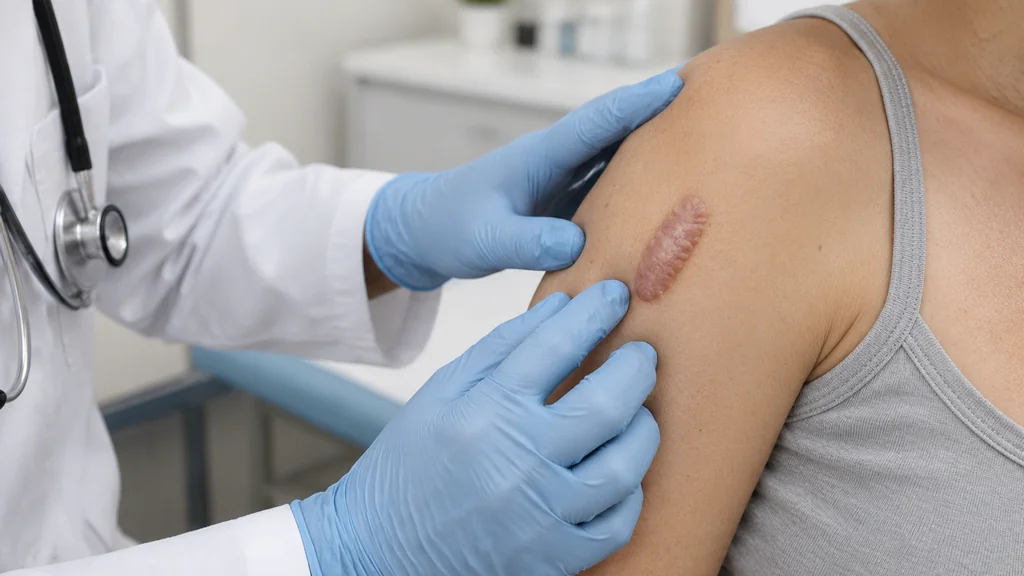
Book an appointment if the keloid is still growing after several months, if it restricts movement, or if it is painful enough to affect sleep. Size matters too. Large scars on the chest, back and shoulders are harder to treat and respond better to early intervention.
Go sooner if you notice signs of infection, which include spreading redness, heat, swelling and pus. A scar that bleeds without being knocked also needs a look. If a scar changes colour or texture in a way that worries you, have a dermatologist check it.
People with darker skin tones, and those with a family history of keloids, scar more readily and should treat any new piercing or wound with care. Ear piercing is a common trigger. If you already know you form keloids, say so before any procedure, including minor ones.
Scars on visible areas deserve specific advice, since the skin there is thinner and harder to treat. Getting rid of keloids on the nose covers the options for a site where both surgery and injections need a careful hand.
Mistakes that make keloids worse
The biggest one is treating a keloid like a spot. Picking, squeezing and needling all add trauma, and trauma is what built the scar in the first place.
Other common errors:
- Applying strong acids or peeling agents to a keloid, which burns the surface without reaching the scar tissue.
- Using tea tree oil or alcohol at full strength, which irritates rather than treats.
- Assuming surgery alone is a cure, when recurrence without follow-up treatment is common.
- Giving up on silicone after three weeks, before it has had a chance to work.
- Ignoring a new piercing bump for months, when early treatment is easier.
None of these are moral failures. They are what happens when a scar looks like something it is not.
Keloid Popping FAQ
Can keloids pop?
No. A keloid is solid scar tissue with no pus-filled cavity, so there is nothing to release. If fluid comes out when you squeeze one, it is from broken surface skin or an infection underneath, and either way the scar can get worse.
What happens if I pop a keloid?
You create a new wound in tissue that already overproduces scar. The keloid often grows, darkens and becomes more tender, and it may break down and become infected. It also becomes harder for a dermatologist to treat cleanly later.
Can a keloid turn into a pimple?
A pimple or cyst can form on top of a keloid, since scarred skin still has pores. That is a separate problem from the keloid itself. Use a warm compress and leave it alone, and see a doctor if it is painful or spreading.
Do keloids ever go away on their own?
Some flatten and fade slowly over years, especially smaller ones. Most raised keloids need treatment to change meaningfully. Silicone, injections and other in-clinic options can all help, but the timeline is months, so check the label on any product that promises faster.
Should I see a doctor for a keloid?
Yes, if it is growing, painful, itchy enough to disturb sleep, or limiting movement. Early treatment tends to work better than waiting. If you have a history of keloids, mention it before any piercing, surgery or minor procedure.

Jessica Bishop
Jessica writes about acne scar types, treatment options, and everyday skincare routines for Acne-Scarring.info, focused on practical, easy-to-follow guidance.
View all posts by Jessica Bishop →