


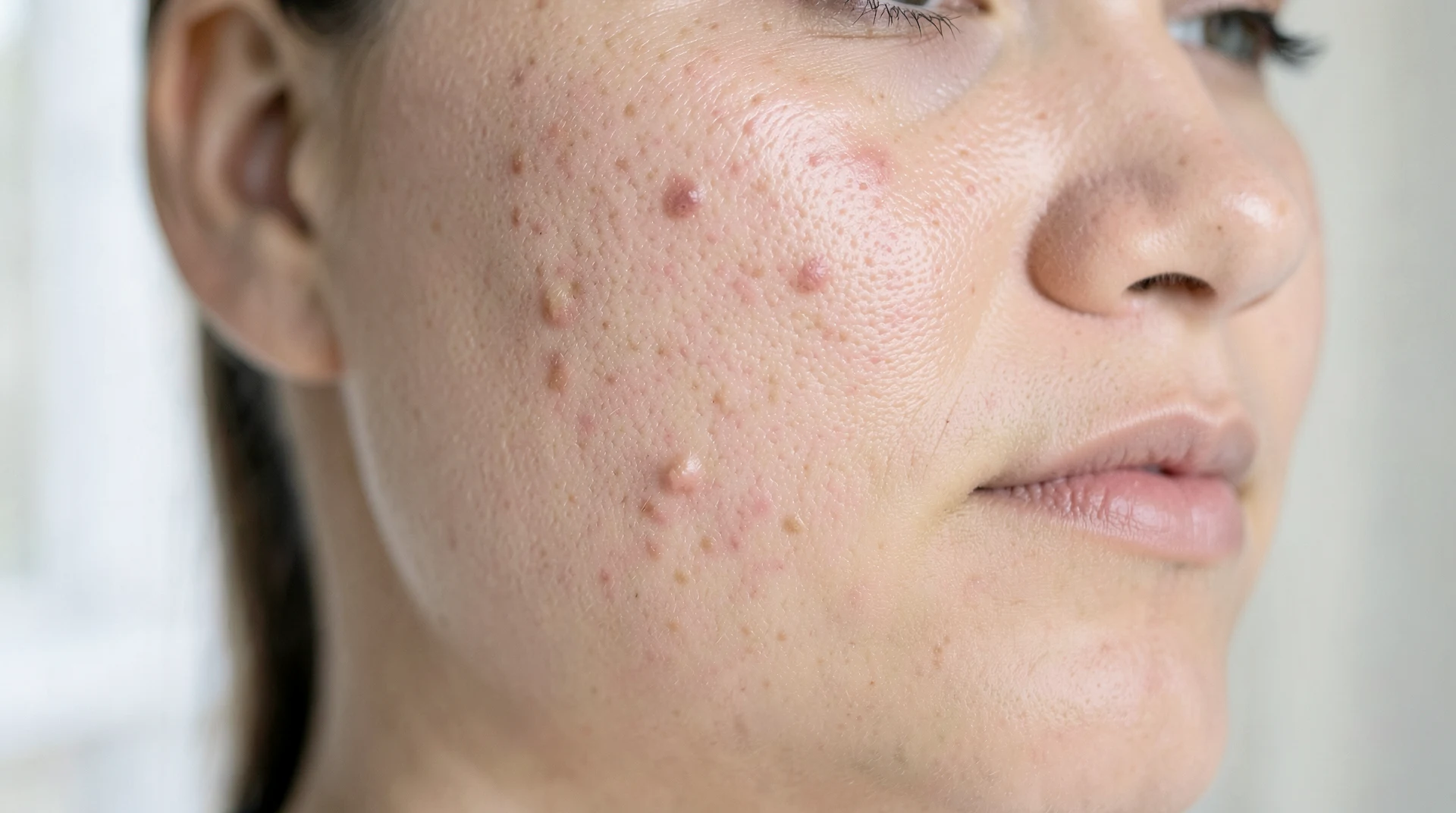
Match the treatment to the scar. Ice pick scars need a technique that reaches deep into a narrow channel, boxcar and rolling scars need resurfacing or a release of the tissue underneath, raised scars need pressure or an injection, and dark marks need pigment work. The American Academy of Dermatology states that “ice pick scars require different treatment than rolling scars”. Pick the wrong one and you spend months and a lot of money watching nothing change.
I have had boxcar scars on my cheeks for about ten years. Some of what I paid for did nothing. Two things worked. This guide takes each scar type in turn, with the dermatology literature on what treats it and six treatments I paid for on my own face.
How to tell which acne scar you have
Daylight, a mirror, clean bare skin. Look at the shape of the mark, then run a fingertip over it, then stretch the skin gently with two fingers and watch what happens. Those three moves separate almost every case.
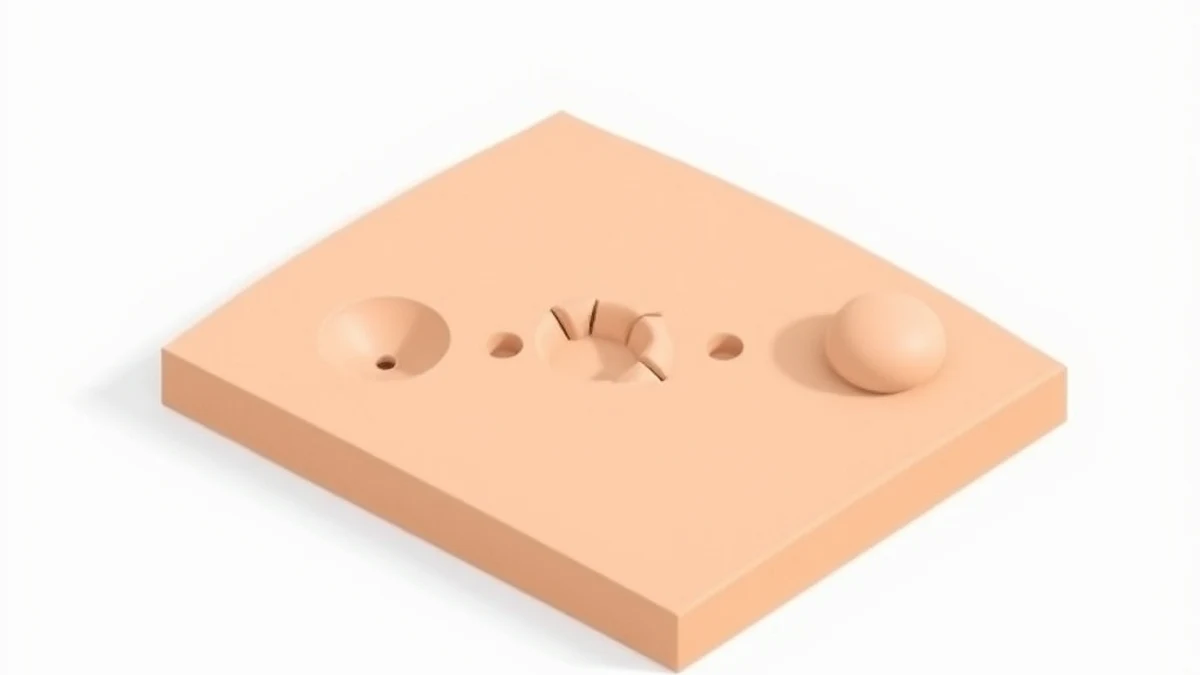
Ice pick scars: narrow, deep, hardest to reach
These look like someone pressed a pin into the skin and left the hole. DermNet describes them as “narrow, deeper than they are wide, and V-shaped with a sharp edge extending downwards into the deep dermis or subcutaneous tissue”, and puts them at 60 to 70 percent of all atrophic acne scars. Cheeks and temples are the usual sites.
The depth is the whole problem. A peel or a resurfacing pass works on the top layer of skin. The floor of an ice pick scar sits far below that, at the bottom of a channel too narrow for anything to get down.
What works. TCA CROSS, which stands for trichloroacetic acid chemical reconstruction of skin scars. A dermatologist places very strong acid, 65 to 100 percent TCA, directly into the channel with a fine applicator. The walls of the channel react and draw together. It takes a course of appointments, never one visit. For a scar that is wide as well as deep, punch excision cuts the scar out and closes the skin with a stitch. DermNet lists it for “prominent, deep, fibrotic, or hypopigmented scars”.
What to skip. Dermaplaning, standard peels, IPL, home dermarollers. None of them reach the floor of the channel, so none of them change the shape.
Boxcar scars: wide craters with sharp walls
A boxcar scar is a crater. DermNet calls them “wider in size, round or oval shaped depressions with distinct edges”. The walls drop straight down and the floor is flat, so the edge casts a hard little shadow in overhead light. That shadow is why they look worse in a lift or an office than they do at home.
This is my type, along my lower cheeks and jaw. The floor is wide enough for treatment to land on, which makes boxcar scars far more treatable than ice pick ones.
What works. Fractional laser resurfacing, either carbon dioxide or erbium, has the largest evidence base. A 2025 systematic review and network meta-analysis in PeerJ found most ablative laser studies reporting improvements in a range from 26 to 75 percent, and ranked laser combined with chemical peeling highest for patient satisfaction. Microneedling and radiofrequency microneedling cost less and take you off work for less time. For a handful of deep ones, hyaluronic acid filler placed under the scar lifts it straight away.
What to skip. A single IPL session. IPL goes after colour and broken vessels. A boxcar scar is a hole, and colour work leaves holes alone.
Rolling scars: wavy skin that smooths when you stretch it
Rolling scars make a whole area of skin look wavy. Pitted is the wrong word for them. DermNet describes them as “wide, with a sloping edge that can be smoothed out if stretched”. That stretch test is the giveaway. Pull the skin taut and the waves flatten out, because you are temporarily pulling on the fibrous bands tethering the surface to the tissue underneath.
What works. Subcision, which DermNet defines as “a surgical technique in which the fibrous scar band under the targeted scar is divided, allowing the skin to return to its normal position”. A needle goes in under the scar and cuts the tether. Pairing it with filler or platelet-rich plasma helps the released skin stay up while new tissue forms. Microneedling suits this type too, because the wavy surface is fully accessible.
What to skip. Serums. Nothing you spread on the surface can cut a band of fibrous tissue several millimetres below it. Waiting to see whether a new bottle helps is how people lose a year.
Hypertrophic and keloid scars: raised above the skin
These are the opposite problem. The skin lays down too much collagen while it heals and the scar sits proud of the surface. DermNet separates the two by size: “A hypertrophic scar is the same size as the acne lesion that caused it, while a keloid scar is an excessive scar formation often larger than the causative lesion”. Jawline, chest and upper back are where they turn up most.
What works. Silicone gel sheeting, worn “for 24 hours a day for some months”, is the conservative first move and you can buy it without a prescription. In a clinic, intralesional steroid injected into the body of the scar softens and flattens it. Pulsed-dye laser helps with the redness that comes with raised tissue.
What to skip. Aggressive scrubs and strong peels over raised tissue. More inflammation means more collagen, which is the mechanism that raised the scar in the first place.
Dark marks: a colour problem
Flat brown or purple marks left where a spot used to be are postinflammatory hyperpigmentation. DermNet defines it as “temporary pigmentation that follows injury or inflammatory disorder of the skin”, and the word temporary matters. The skin structure is intact. Only the colour is wrong, and colour fades, though how long acne marks take to clear varies a lot from person to person.
Separating it from true scarring saves money, because people book clinic appointments for marks that would have faded on their own. DermNet also notes it is “more common in darker-skinned individuals, in whom the colour tends to be more intense”.
What works. Sunscreen first, every single day, because UV keeps feeding the pigment. DermNet is specific about it, recommending “daily application of SPF 50+ broad-spectrum sunscreen” on exposed sites. On top of that, its list of topicals includes vitamin C cream, azelaic acid, niacinamide, tretinoin cream and glycolic acid peels. Hydroquinone is the strongest of them and belongs in a conversation with a doctor.
What to skip. Years of unsupervised hydroquinone. DermNet ties exogenous ochronosis, a paradoxical darkening, to “high concentrations, multiple times per day, for years”. And stop picking. Every pick restarts the inflammation that made the mark.
Which treatment matches which scar
Take this table to a consultation as a shortlist. A dermatologist looking at your actual face will narrow it further, and most people have two or three types at once.
| Scar type | How you recognise it | Treatments that work | Skip these |
|---|---|---|---|
| Ice pick | Pinhole, deeper than it is wide | TCA CROSS, punch excision | Peels, dermaplaning, home rollers |
| Boxcar | Crater with sharp walls, flat floor | Fractional laser, microneedling, RF microneedling, filler | Single IPL session |
| Rolling | Wavy, flattens when skin is stretched | Subcision, subcision plus filler or PRP, microneedling | Topical serums alone |
| Hypertrophic or keloid | Raised above the skin, firm | Silicone sheeting, intralesional steroid, pulsed-dye laser | Harsh exfoliation, strong peels |
| Dark marks | Flat, only the colour differs | Daily SPF 50+, vitamin C, azelaic acid, niacinamide, glycolic acid | Clinic resurfacing, picking |
Every treatment that works on a sunken scar is a procedure. Every treatment that works on a dark mark comes in a bottle. Understanding that divide saves more money than any other thing on this page.
What you can do at home, and where home care stops
Home care cannot fill a depressed scar. It does four other things well, and all four are useful while you save up or wait for an appointment.
- Fade dark marks. Sunscreen daily, plus vitamin C or azelaic acid or niacinamide, gives real improvement over a few months.
- Improve overall texture. A low-strength retinol two or three nights a week, built up slowly, makes the skin around the scars smoother.
- Flatten a mild raised scar. Silicone sheeting is sold over the counter and needs consistency rather than a prescription.
- Prevent the next scar. DermNet is direct about this, saying “timely appropriate treatment for acne during the active phase can reduce the incidence and severity of acne scarring”. Treating the acne you have now is the cheapest scar treatment there is.
Four things genuinely need a clinic. Strong acid placed inside a scar channel will burn skin badly if it goes where it should not. Fractional laser needs a trained operator choosing the wavelength and cooling the skin. Subcision is minor surgery under the skin. Steroid injections need correct dosing, since too much thins the skin.
Home dermarollers sit in between. At shallow depths they help serums penetrate and give mild stimulation to the shallowest marks. Clinic devices go several times deeper. If you want more detail on the topical route before you commit, we have a longer look at whether retinol helps acne scars, and if you are still working out what you are looking at in the mirror, start with how to tell ice pick, boxcar and rolling scars apart.
What I tried on my own boxcar scars over ten years
Fitzpatrick type two, pale, burns in about twenty minutes of June sun. Mild to moderate boxcar scars on both cheeks, a few deeper ones near the jaw. Six things, in the order I tried them.
Retinol at 0.05 percent, eight months. Skin looked healthier and the texture around the scars improved. Scar depth did not change. Money well enough spent, for a different reason than the one I spent it for.
Salicylic acid peels, four sessions. These cleared the brown marks left over from the active acne stage, which made my face look better in photos. The craters stayed exactly as deep. My dermatologist told me that would happen before we started, and she was right.
Home dermaroller at half a millimetre, weekly for six months. Faint improvement in the shallowest scars only. The deeper ones ignored it completely. Cheap enough that I do not regret trying, and nothing like professional needling.
Hyaluronic acid filler in the deepest scars, twice, eighteen months apart. The most obvious single change of anything I did. Three or four deep scars lifted immediately in one appointment. It faded back over a bit more than a year, which is what filler does.
Professional microneedling with PRP, three sessions eight weeks apart. Best overall result. Session one did almost nothing visible. By session three my skin looked smoother in flat light, which is the light that shows scars least kindly. The evidence on PRP as an add-on to needling is mixed, and my one face cannot settle it.
Fractional carbon dioxide laser, one session. Red, swollen and peeling for a week and a half. Once it settled, the improvement was roughly what three microneedling sessions had given me, delivered in one go. I stopped there because of cost. Starting over, I would go to fractional laser first and skip the home rolling entirely.
How long treatments take and what they cost
Nothing here works in a fortnight. Collagen remodelling is slow biology, and every course below is measured in months. Every figure in the table below is a planning estimate. The session counts, gaps and timelines reflect common clinic practice for these treatments and will be adjusted to your skin by whoever treats you, and the prices are rough US market ranges that vary a lot by city and clinic. Expect your own quote and your own schedule to differ.
| Treatment | Sessions | Spacing | Typical US cost | When you see the full result |
|---|---|---|---|---|
| TCA CROSS | A course | Weeks apart | $150 to $350 per session | Six to nine months from the first |
| Fractional CO2 laser | Three to five | Four to eight weeks | $400 to $900 per session | Up to six months after the last |
| Professional microneedling | Three to six | Four to eight weeks | $200 to $400 per session | Three to six months from the start |
| Subcision | Two to four | Six to eight weeks | $300 to $600 per session | Three to four months |
| Hyaluronic acid filler | One, repeated as it fades | As needed | $350 to $700 per area | Immediate |
| Silicone sheeting | Daily wear | Continuous | $20 to $50 over the counter | Some months of consistent wear |
| Topicals for dark marks | Daily | Ongoing | $30 to $120 a month | Two to six months |
On filler specifically, the AAD gives a wide window for how long it holds, saying “most fillers give temporary results, ranging from 3 months to 2 years”. Mine sat at the middle of that. Peels are similar in shape, with the AAD noting a mild course often runs to several treatments spaced a few weeks apart.
Can you combine treatments?
Yes, and combinations usually beat any single approach. The PeerJ review found the best patient satisfaction scores went to laser paired with chemical peeling, and the best measured scar scores to laser paired with PRP. Sequence and recovery time are what a good dermatologist actually plans.
- Subcision, then microneedling. The first releases the tether, the second builds collagen into the space it opened. A gap of about a month between them is normal.
- TCA CROSS on the pinholes, laser on the craters. Two mechanisms for two problems, and plenty of people have both types across one cheek.
- Topicals alongside anything. Vitamin C and niacinamide keep pigment in check while the skin recovers from a procedure.
Avoid stacking two aggressive treatments back to back. A deep peel followed straight away by ablative laser gives the skin no recovery window and raises the odds of a complication.
If you have darker skin, read this before booking a laser
Most scar guides skip this, and it changes the answer. A 2026 systematic review in Skin Research and Technology found that fractional CO2 laser “has been associated with a higher incidence of post-inflammatory hyperpigmentation (PIH) … especially in individuals with darker skin types”. Treating a scar and being left with a dark patch where it was is a real outcome, not a rare one.
The same review found no statistically significant difference in overall efficacy between fractional CO2 laser and microneedling radiofrequency in most studies, while microneedling radiofrequency had shorter downtime, one to three days against two to seven. The AAD is unambiguous on the safety side, stating that “microneedling is safe for all skin tones” and that radiofrequency microneedling is too.
If your skin is Fitzpatrick four to six, the practical move is to ask any clinic two questions before you book. How many patients with your skin tone have they treated with the device they are proposing, and what settings will they use. The review notes that lower energy, wider spacing and longer intervals between sessions are recommended for darker skin. A clinic that cannot answer either question is the wrong clinic.
Frequently asked questions
Will acne scars go away on their own?
Depressed scars will not. Ice pick, boxcar and rolling scars are missing tissue, and the body does not spontaneously rebuild collagen it lost years ago. Dark marks are the exception and do fade on their own, slowly, and faster with daily sun protection. If a mark is flat and only differs in colour, time is on your side. If you can feel a dip with a fingertip, it needs treatment.
Is microneedling or laser better for acne scars?
It depends on your scar depth and your skin tone. Fractional laser tends to do more per session for moderate to severe boxcar and rolling scars, with more downtime and higher cost. Microneedling costs less, is easier to recover from, and the AAD lists it as safe for all skin tones. A 2026 systematic review found most studies showed no significant efficacy gap between fractional CO2 laser and microneedling radiofrequency, which makes tolerability and pigmentation risk the deciding factors for many people.
Can I treat acne scars at home?
You can treat dark marks at home with sunscreen, vitamin C, azelaic acid and niacinamide, and you can improve general skin texture with a retinoid. A home dermaroller gives mild results on the shallowest marks. Anything with real depth needs a clinic, because the techniques that change scar shape involve strong acid, lasers or a needle passed under the skin.
How much does acne scar treatment cost in total?
Plan in courses. Single visits are the wrong unit. A topical-only routine runs to a modest annual spend on products. A professional microneedling course typically lands in the low four figures, a fractional laser course higher, and combined work with subcision and filler higher again. Those are US figures and shift a lot by region. Many dermatology practices price a package below the per-session rate, so ask.
Are darker skin tones at higher risk from acne scar treatments?
From ablative laser, yes, and the section above sets out the evidence. The practical version is a short list of questions for the clinic. How many patients with your skin tone have they treated on this device, what settings will they use, and what is their plan if you do pigment afterwards. Microneedling, radiofrequency microneedling and subcision carry less pigment risk than ablative laser, and silicone sheeting and steroid injections for raised scars are fine across skin tones.
Where to start. Identify the shape of what you have with the mirror and the stretch test. Treat any active acne next, so you stop adding new scars. Get the dark marks fading with sunscreen and a topical while you plan. Then book a consultation for the depressed or raised scars, with a shortlist from the table above in hand. For most people with mild to moderate atrophic scarring, a course of professional microneedling is the sensible first spend, and it is the one I would keep if I could only keep one thing I paid for.
Set the calendar to months. Every worthwhile treatment here is measured in appointments spread across a year, and the commonest way people waste money on acne scars is quitting a course halfway to start a different one.
This article is educational and does not replace a consultation. Talk to a qualified dermatologist about your own skin before starting any treatment described here. Results differ from person to person, and depend on scar type, severity, skin tone and factors this guide cannot see.

Jessica Bishop
Jessica writes about acne scar types, treatment options, and everyday skincare routines for Acne-Scarring.info, focused on practical, easy-to-follow guidance.
View all posts by Jessica Bishop →